Milan is one of the most polluted cities in Europe, due to its location in the Po valley.
In January 2024, the concentrations of PM10 reached 100 μg/m3 and those of PM2.5 76 μg/m3 (1), values well above the limits recommended by the World Health Organization (WHO) (2). Also in 2024, Milan recorded PM2.5 levels 13.5 times higher (3) than the WHO annual guide values. In 2021, the city ranked 303rd out of 323 European cities for PM2.5 concentration (3), confirming an alarming and now structural vision.
Air pollution is one of the most serious public health risks in the world: according to the World Health Organisation (WHO), it causes around 7 million premature deaths worldwide every year (4).
In Milan in 2019, 1.300 of deaths were attributable to long-term exposure to NO2 and more than 1.600 to exposure to PM2.5. This means that every year in Milan, 10-13% of deaths are linked to bad air quality (5).

The insights shown in the image above come from an online survey completed by 58 respondents (6). The results reveal that, despite its seriousness, air pollution remains an almost “invisible” emergency for most people. Even when data are available, they are often difficult to interpret or simply absent from everyday life. In this context, the challenge of the project becomes not only informative but also experiential: making tangible and visible something that people normally do not perceive.
Pillars for project development
Make complex data simple: make air quality information easily understandable and accessible
Promote awareness: consolidate a fragmented awareness, through curiosity and engagement
Engage the community: highlight the power of individual and communal actions for healthier habits

An integrated digital and physical architecture
This architecture not only provides access to real-time environmental data, but also purifies the air through physical interventions.
Interactive totems placed in public spaces, along with a dedicated website, create a continuous link between people and their environment.

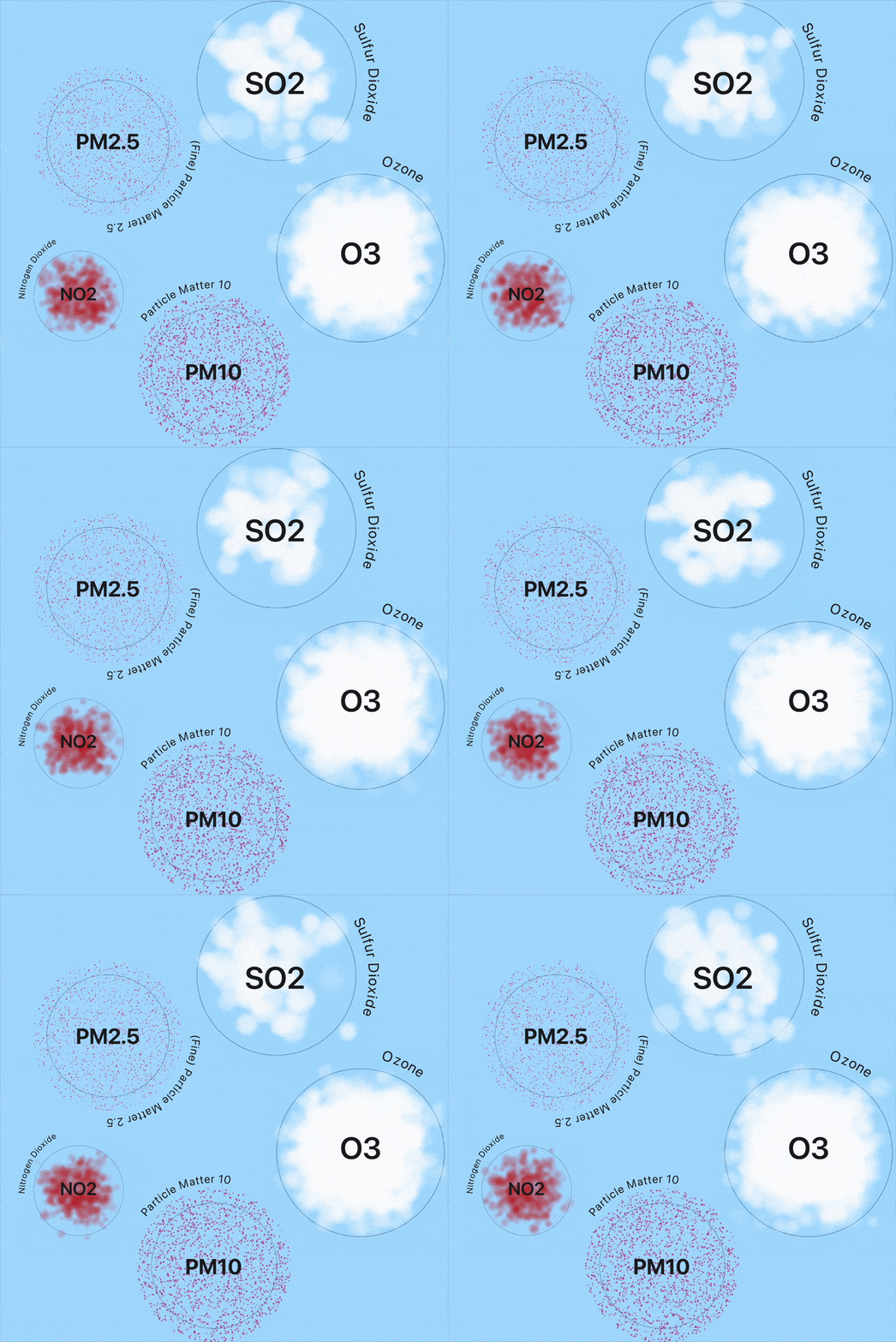
Data visualization as primary focus
The data used in the project comes from two different official sources: Air Quality Index and Milano Open Data. Since raising public awareness is one of the project’s main goals, a significant part of the work focuses on real-time data visualization. The system continuously retrieves information from both sources and updates the visual output automatically, ensuring that the experience reflects the current state of the air at any moment.
Designing the experience through Vibe Coding
To achieve this, the entire visualisation engine was developed through Vibe Coding in Java (Processing), building a system capable of translating the physical behaviour of particles and gases into dynamic visual elements. Motion and animated patterns were integrated to strengthen engagement and clarity, allowing users to intuitively perceive the invisible dynamics of air quality through a responsive and ever-evolving visual language.


Simulating different weather conditions
To create a more engaging and emotionally meaningful experience, we have included animated weather images that reflect real-time environmental conditions on the totem screen.
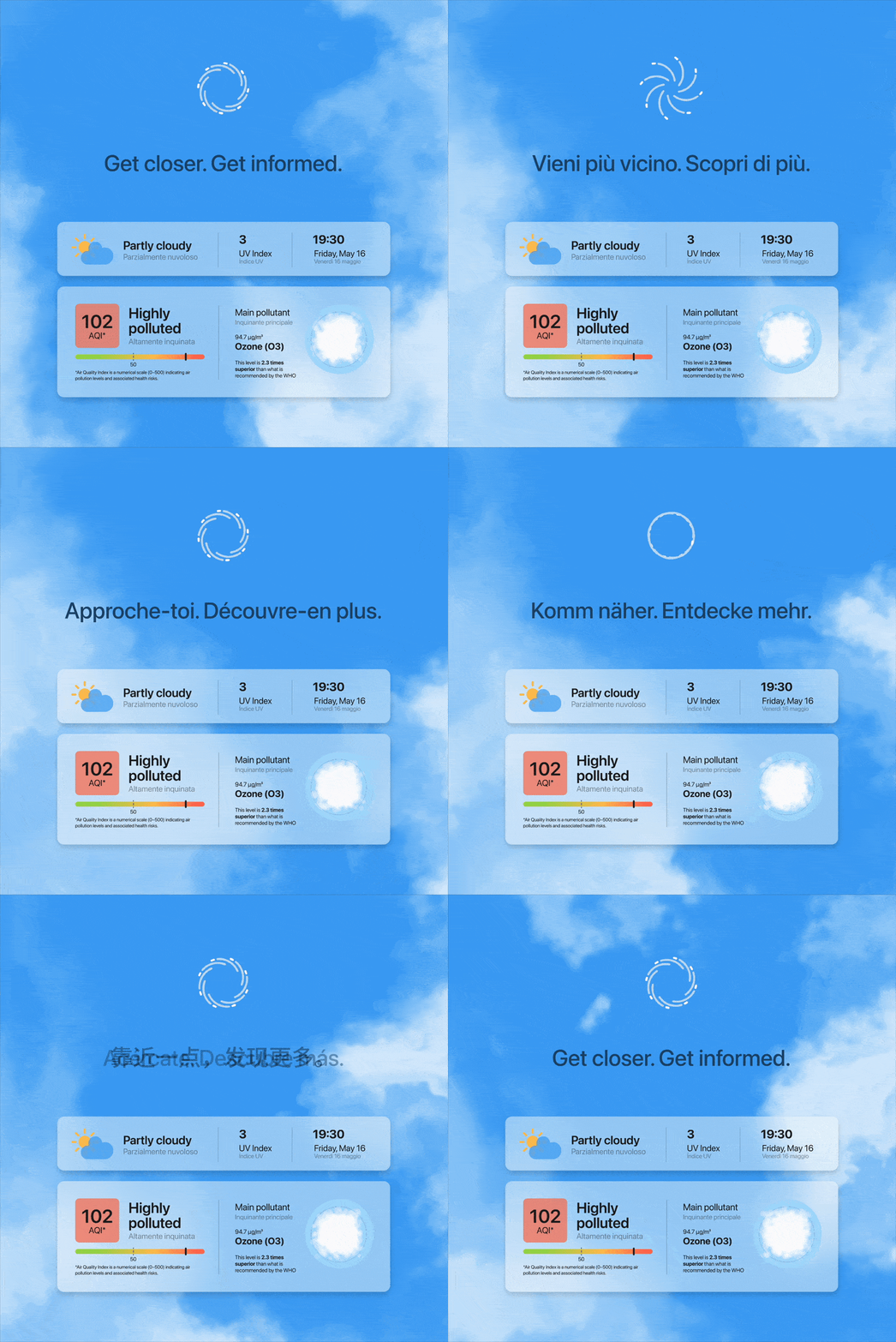
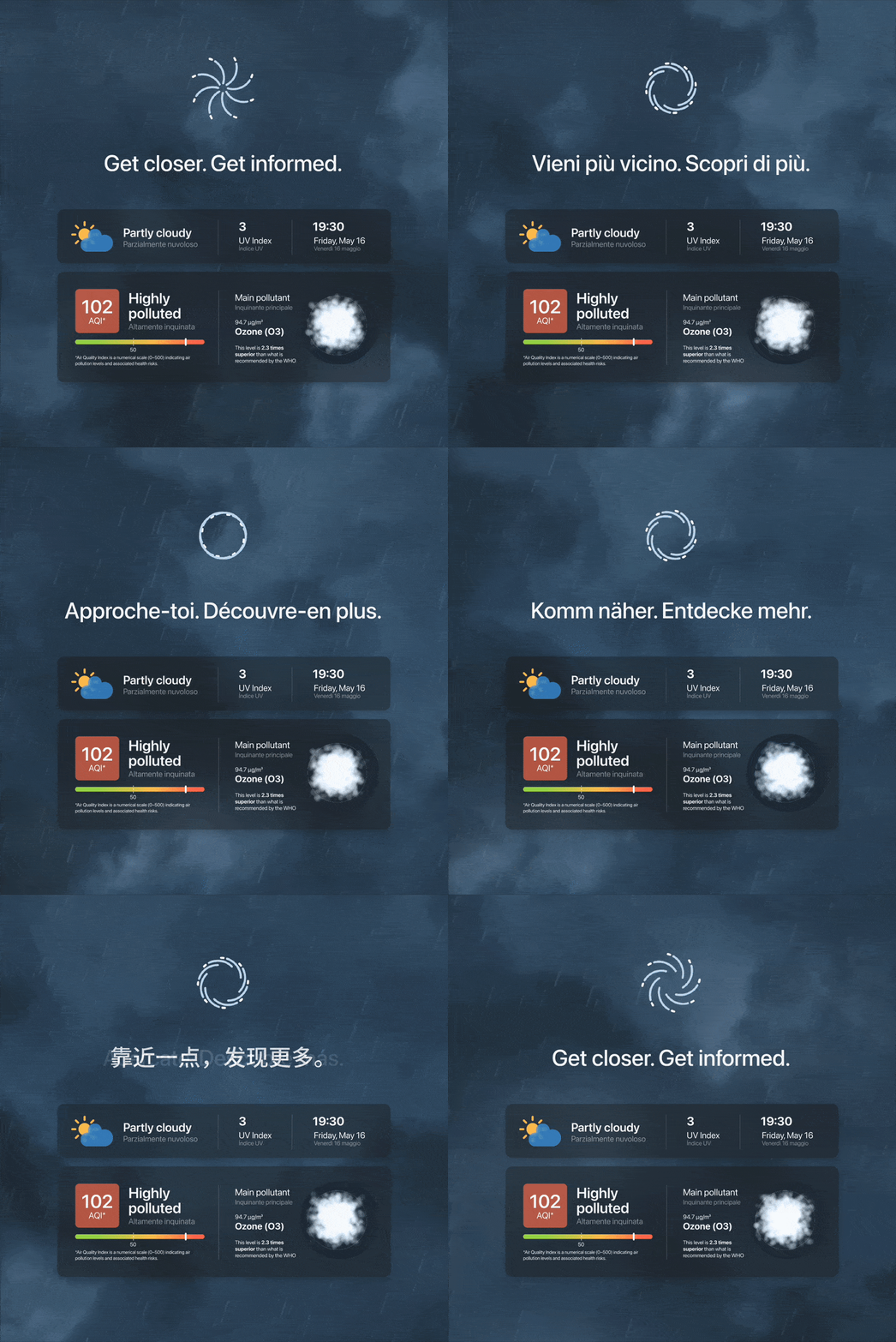


Prototype DEMO
Sources
-
MilanoToday. (2024, 2 gennaio). Smog oggi 2 gennaio 2024. MilanoToday.
https://www.milanotoday.it/attualita/inquinamento/smog-oggi-2-gennaio-2024.html
-
World Health Organization. (2021). WHO global air quality guidelines: Particulate matter (PM2.5 and PM10), ozone, nitrogen dioxide, sulfur dioxide and carbon monoxide. https://www.who.int/publications/i/item/9789240034228
-
Gulli, M. (2024, February 19). Unbreathable air in Milan: the situation worsens. Milano Today
https://www.milanotoday.it/attualita/english-news/pollution-milan-quality-air.html
-
World Health Organization. (2018). Burden of disease from ambient air pollution for 2016.
https://cdn.who.int/media/docs/default-source/air-pollution-documents/air-quality-and-health/aap_bod_results_may2018_final.pdf
-
Sara Tunesi et Al. Estimated number of deaths attributable to NO2, PM10, and PM2.5 pollution in the Municipality of Milan in 2019. Epidemiol Prev 2024; 48 (1): 12-23. https://doi.org/10.19191/EP24.1.A660.001
-
Online survey (2025). Air Quality: general knowledge, perception and habits. English version: https://forms.gle/wnDouFwEZ3qL3uZu9 Italian version: https://forms.gle/jXnQKVwTR3YYgoMR7